
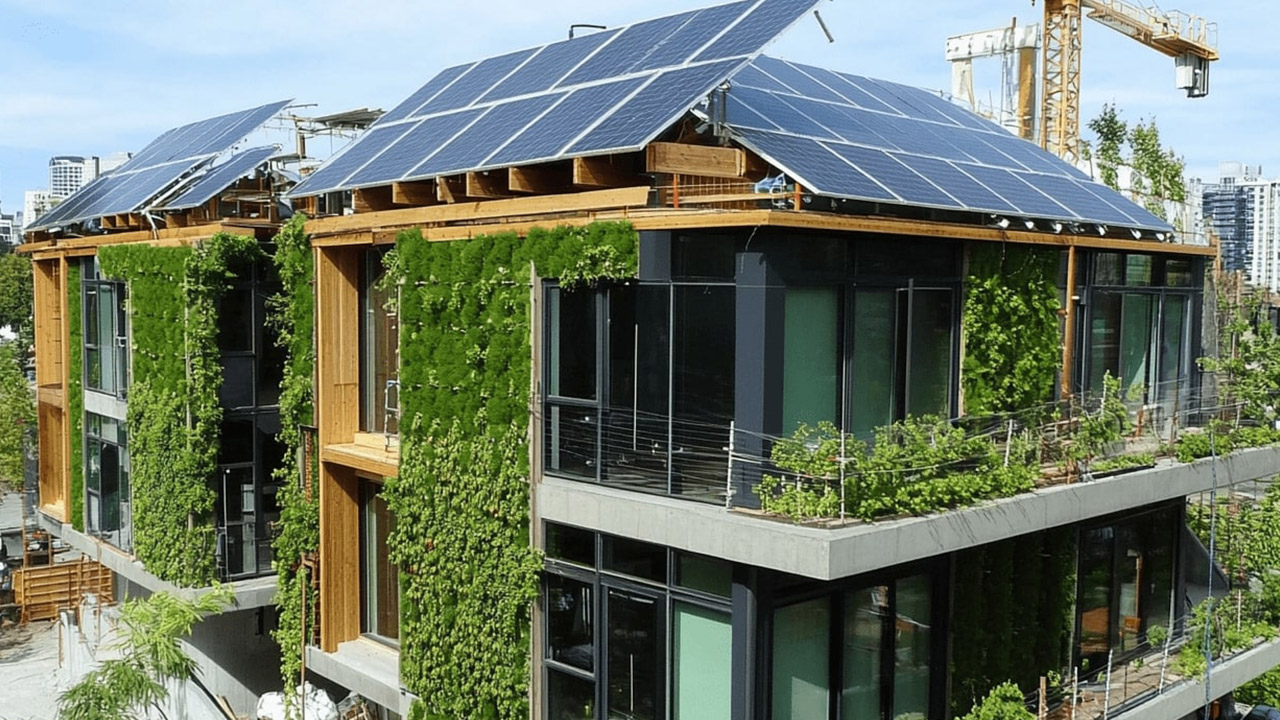
1. Sustainability Is Now a Baseline
From Vancouver’s Green Building Strategy to Toronto’s Zero Emissions Buildings Framework, municipalities are setting ambitious sustainability mandates. LEED certification, Step Codes, and performance-based energy models are becoming standard.
But compliance alone isn’t enough. Clients now expect:
- Lower operating costs
- Healthier indoor air
- Better energy ratings for marketing and resale
Despite high-performance building envelopes and efficient materials, many green buildings underdeliver — simply because their mechanical systems weren’t designed with sustainability in mind.
2. The Mechanical System: An Energy Linchpin
HVAC systems account for 40% to 60% of total energy use in a typical commercial or multifamily building. Poor duct routing, oversized equipment, inefficient zoning, and outdated ventilation strategies can erase the gains made through architectural design.
In other words, you can’t build green without building smart — mechanically.
Traditionally, mechanical design is approached late in the process, often disconnected from architectural intent. Engineers are handed floor plans and asked to “make it work.” This leads to inefficiencies like:
- Ducts running against beam structures
- Equipment located far from demand zones
- Poor thermal zoning, causing overheating or overcooling
All of these result in increased energy use and operating cost — even in buildings labeled “green.”
3. CAM Building: Sustainability by Design
CAM Building offers a smarter approach. By using AI to analyze architectural layouts, simulate energy behavior, and generate optimized HVAC designs, it ensures that mechanical systems enhance, not undermine, the building’s sustainability goals.
CAM’s system takes into account:
- Building geometry and space usage
- Local climate data and building codes
- Optimal equipment placement and duct routing
This integration leads to:
- Reduced system losses
- Right-sized equipment
- Better thermal control per zone
- Lower operational emissions
In one recent mixed-use project in Ontario, CAM’s recommendations led to a 22% improvement in energy efficiency, contributing directly to LEED Gold certification.
4. From Compliance to Performance
Green building isn’t just about meeting code — it’s about exceeding it.
CAM’s simulation engine allows project teams to run “what-if” scenarios, comparing energy usage based on different system layouts or zoning choices. This empowers designers to make proactive, performance-focused decisions — instead of reactive ones forced by late-stage revisions.
Moreover, CAM provides documentation aligned with green certification pathways, including:
- LEED energy modeling support
- Passive House mechanical design guidelines
- Step Code compliance summaries
This ensures that sustainability isn’t just an aspiration — it’s measurable and documented.
5. Reducing Carbon Without Slowing Projects
There’s a misconception that sustainable design takes more time. But CAM proves that speed and sustainability can go hand in hand. Mechanical systems generated by CAM are not only greener — they’re delivered in a fraction of the time required by traditional workflows.
This means:
- Less delay in permitting
- More time for refinement
- Earlier contractor engagement for green construction planning
The result is a project that hits environmental and commercial targets — without sacrificing timeline.
6. Market Advantage: Green Sells
Smart developers know that “green” is no longer a luxury feature — it’s a selling point. Tenants and buyers are increasingly energy-conscious. Having the data to show lower HVAC-related energy consumption or better indoor air quality can be the differentiator that closes deals.
CAM gives project teams that data, in clear reports and performance summaries that marketing and sales teams can use to prove value — not just promise it.
Conclusion: Greener Buildings Begin With Smarter Design
Mechanical systems are often the missing link in sustainable construction. But with tools like CAM Building, they become a powerful asset. By integrating intelligent HVAC design from the start, project teams can meet (and exceed) green mandates, reduce carbon emissions, and deliver buildings that live up to their promise — both environmentally and economically.
If you want to build green, you have to build smart. And that starts with how you design your mechanical systems.


No comment